Brand
Imagery is where Tomorrow’s Timeless becomes visible. Every image should express the Sanlorenzo spirit through restraint, elegance and emotional depth, translating the brand into a recognisable visual universe.
Brand idea captured
Translating /TOMORROW’S TIMELESS into imagery.
Our imagery is not only descriptive it is interpretative. Every image should express the values behind /TOMORROW’S TIMELESS through a precise visual language. Composition, light, perspective, movement and details work together to create a recognisable atmosphere and convey the Sanlorenzo identity. The following principles define how the Brand Idea translates into imagery. Each element contributes to building a visual language that is contemporary, refined and unmistakably Sanlorenzo.
EXTERNAL
Relationship between yacht and environment.
SCENARIOS
Context and surroundings.
INTERIORS
Spaces, styling and experience.
LIGHTS
Atmosphere and emotional tone.
MOTION
The yacht in movement.
ANGLES
Point of view and composition.
DETAILS
Materials, textures and fragments.
- Clean horizons
- Architectural compositions
- Natural light
- Material details
- Curated styling
- Orthogonal lines
- Depth of field
- Over-staged lifestyle
- Generic nautical imagery
- Oversaturated colours
- Crowded scenes
- Aggressive post-production
- Too much decorative props
- Distorted perspectives
- Image distortion using wide angle lenses
- Excessive blur
External
The yacht as a sculptural presence within the landscape.
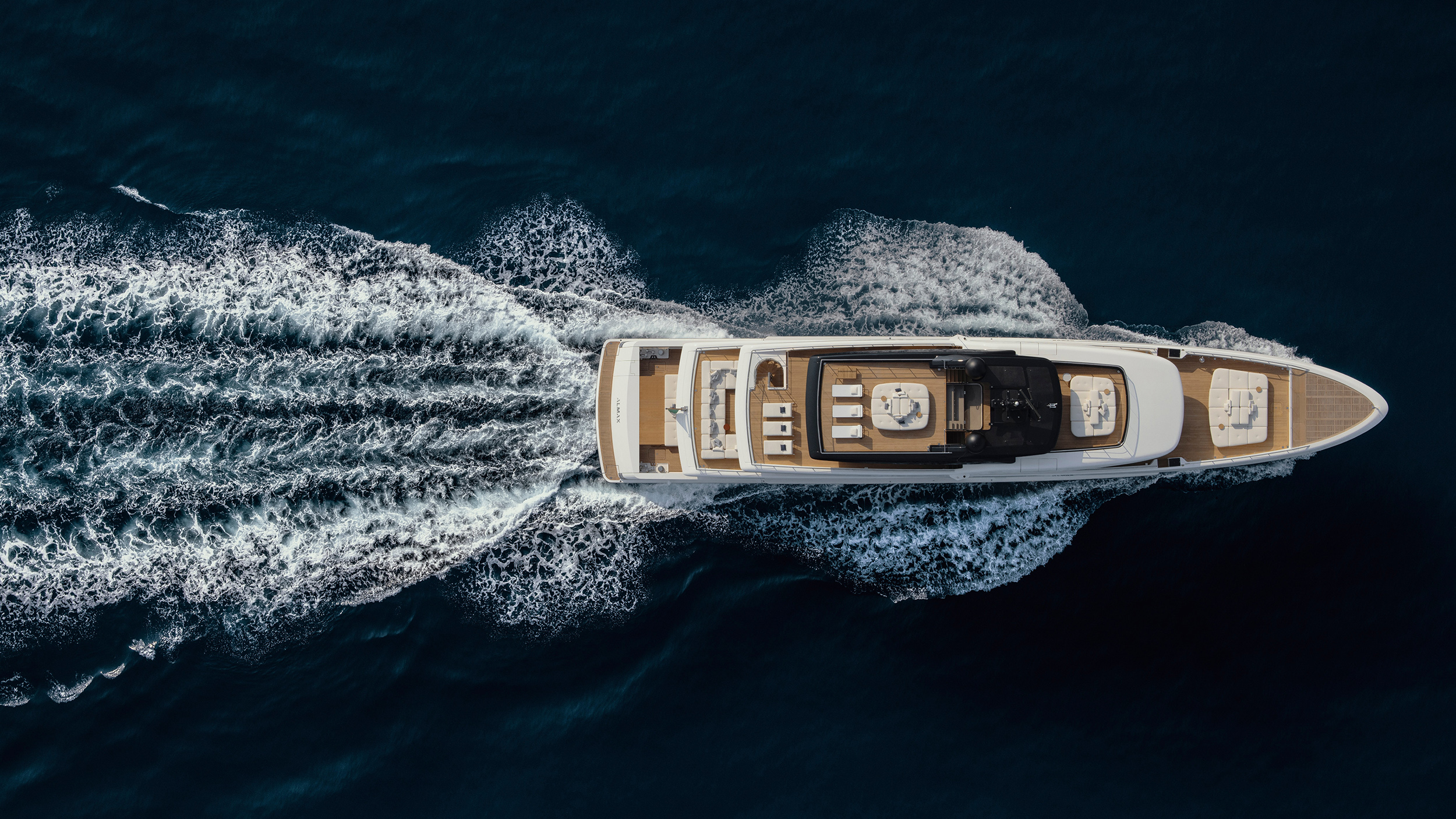
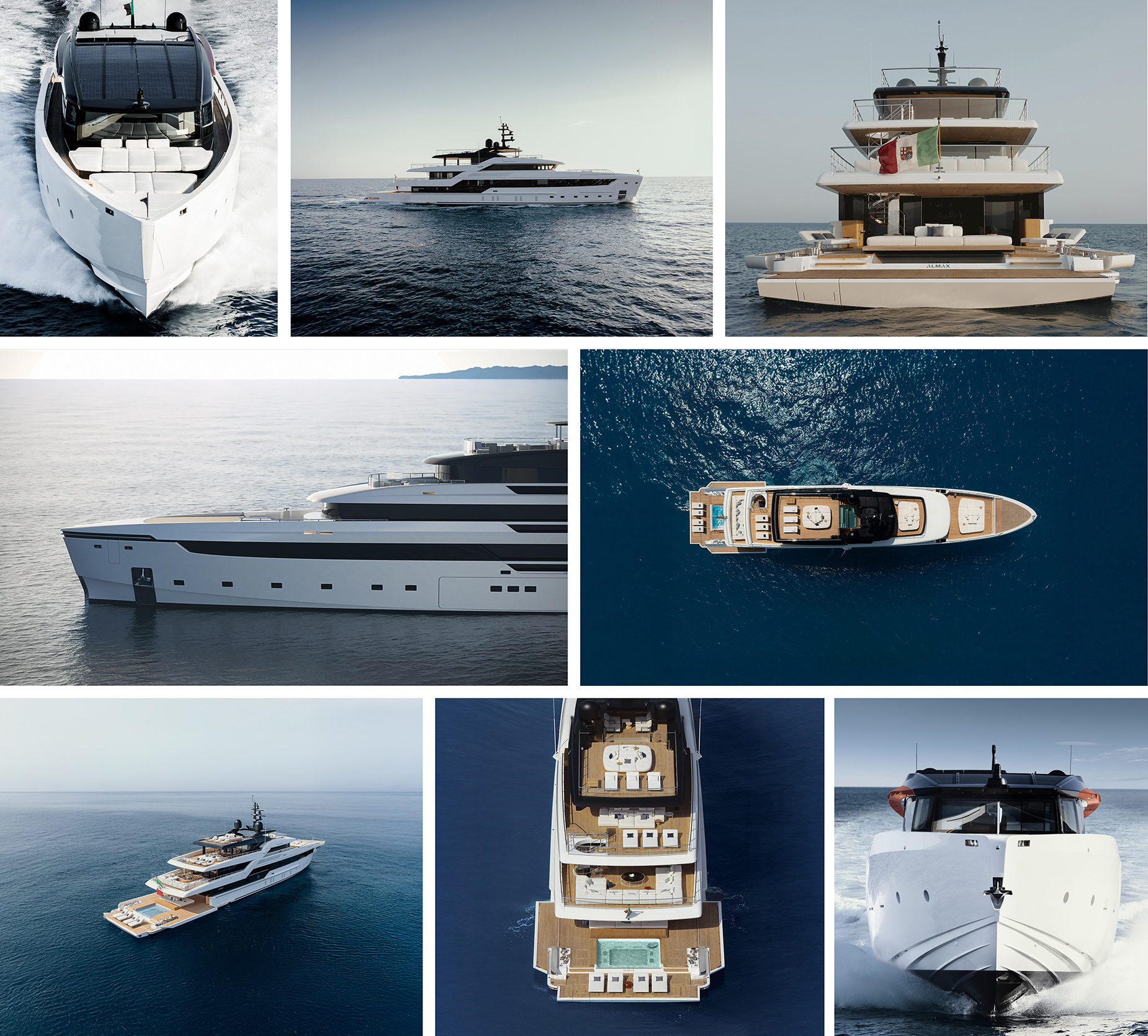
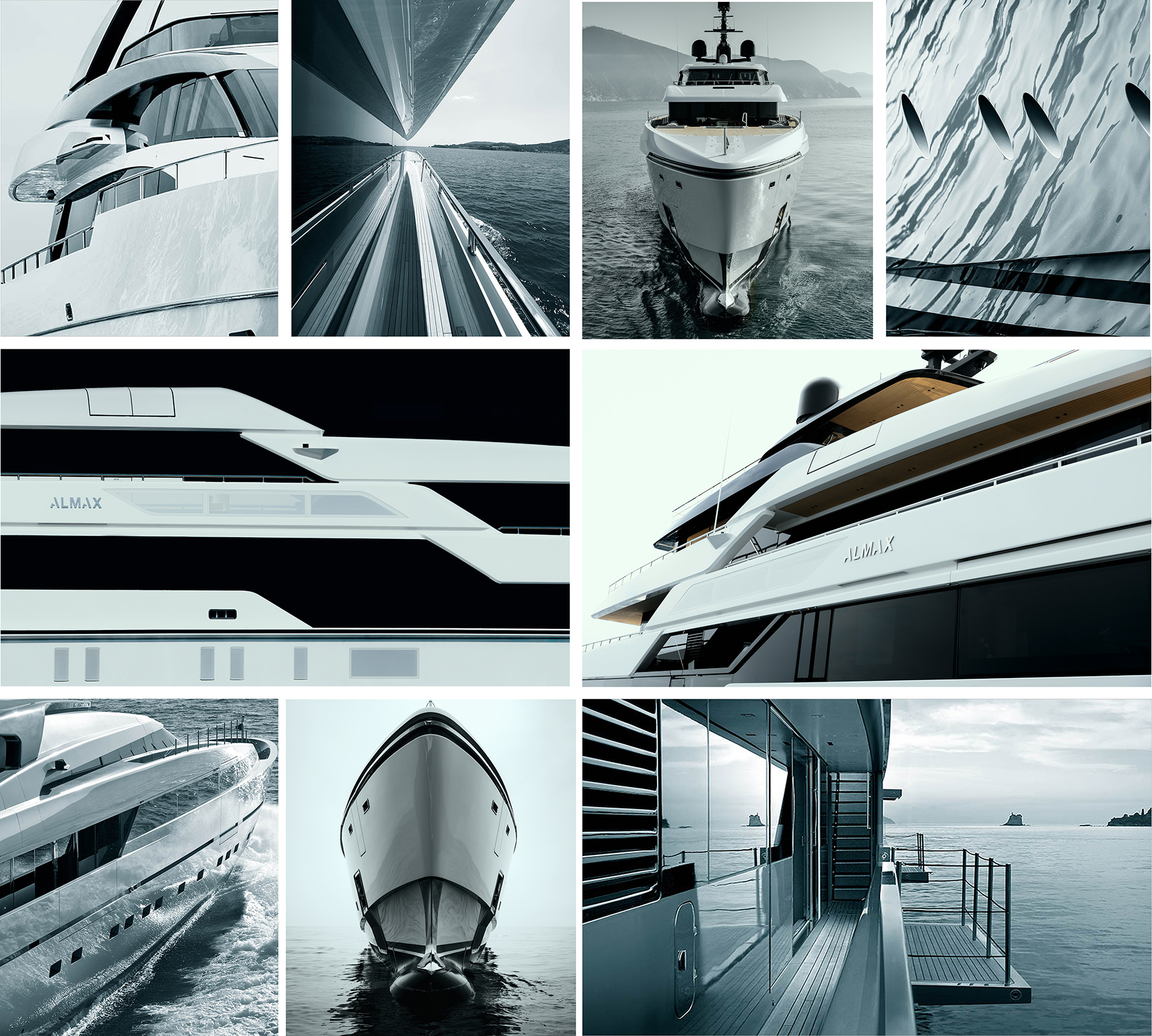
External imagery should present the yacht as an architectural object, defined by balance, proportions and clean surfaces. The vessel is never isolated from its context but placed within a wider relationship with sea, horizon and environment. Wide views, frontal perspectives, aerial shots and pure side elevations help reveal the identity of the yacht while reinforcing its timeless and essential character.
Lights
Light defines atmosphere, materiality and emotion.
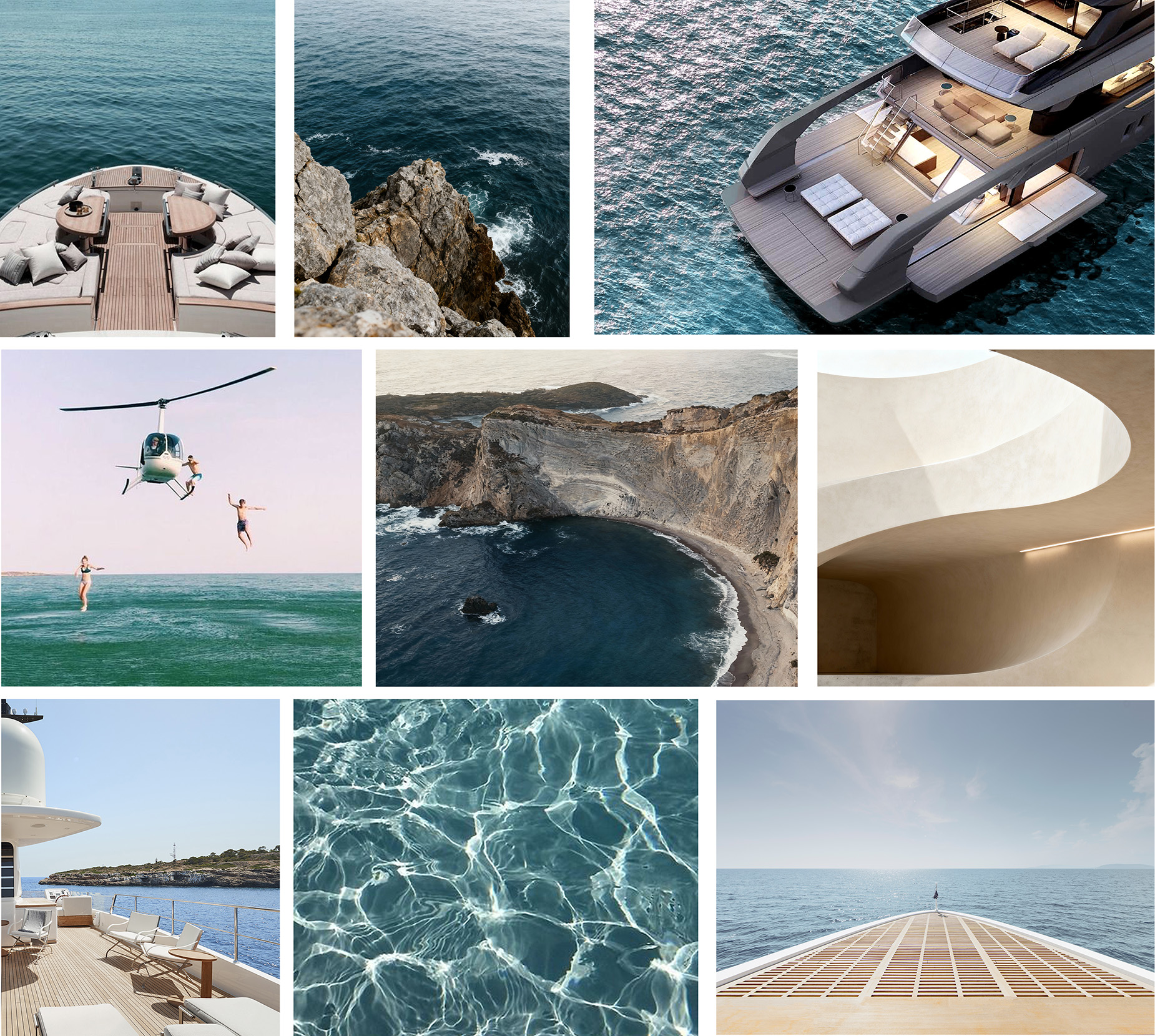
Natural light should remain soft, diffused and authentic. Early morning, golden hour and subtle transitions are preferred to create calm, sophisticated and immersive scenes. Light is used to reveal textures, reflections, water surfaces and architectural volumes, never as a dramatic effect, but as an element that enhances the experience.
Angles
Perspective becomes a tool to reveal design and proportions.
Imagery should explore the yacht through precise viewpoints: frontal compositions, aerial perspectives, side elevations and close architectural crops that highlight geometry and details. Angles should emphasise the dialogue between lines, surfaces and volumes, translating the design language into recognisable visual compositions.
Backgrounds/Scenarios
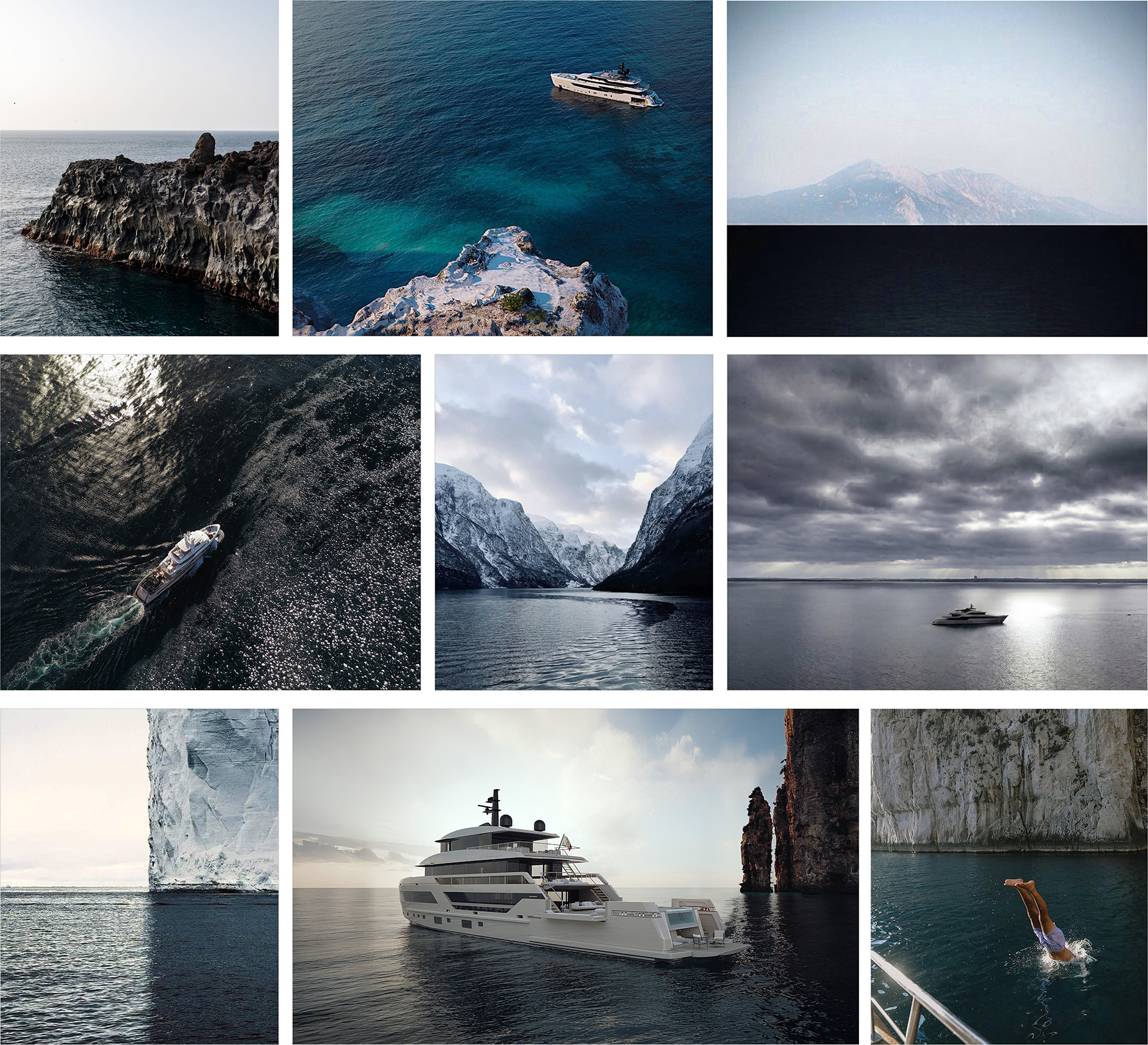
Landscape and context become part of the narrative.
Scenarios should feel authentic, refined and immersive. Cliffs, open sea, remote coastlines and minimal natural environments help reinforce the sense of freedom and exploration. The environment is never decorative. It should amplify the emotional dimension of the experience and establish a relationship between yacht, nature and horizon.
Motion
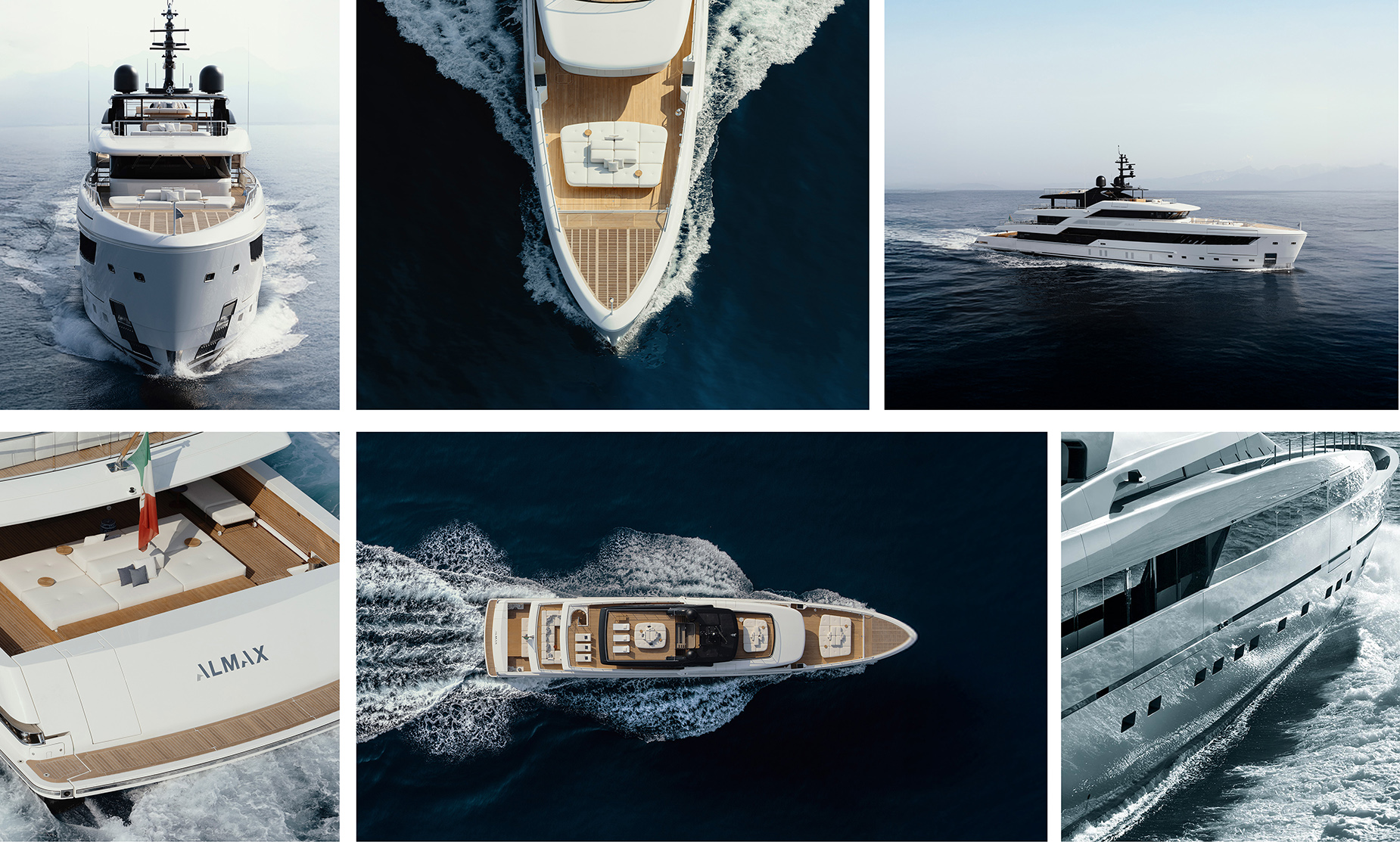
Movement expresses performance, freedom and life on board.
Motion imagery should capture the yacht in a fluid and controlled way. Wake patterns, navigation views and moving perspectives communicate dynamism while preserving elegance. Movement is never aggressive or excessive; it remains precise, effortless and balanced, reflecting the Sanlorenzo approach to performance.
Details Ext/Int
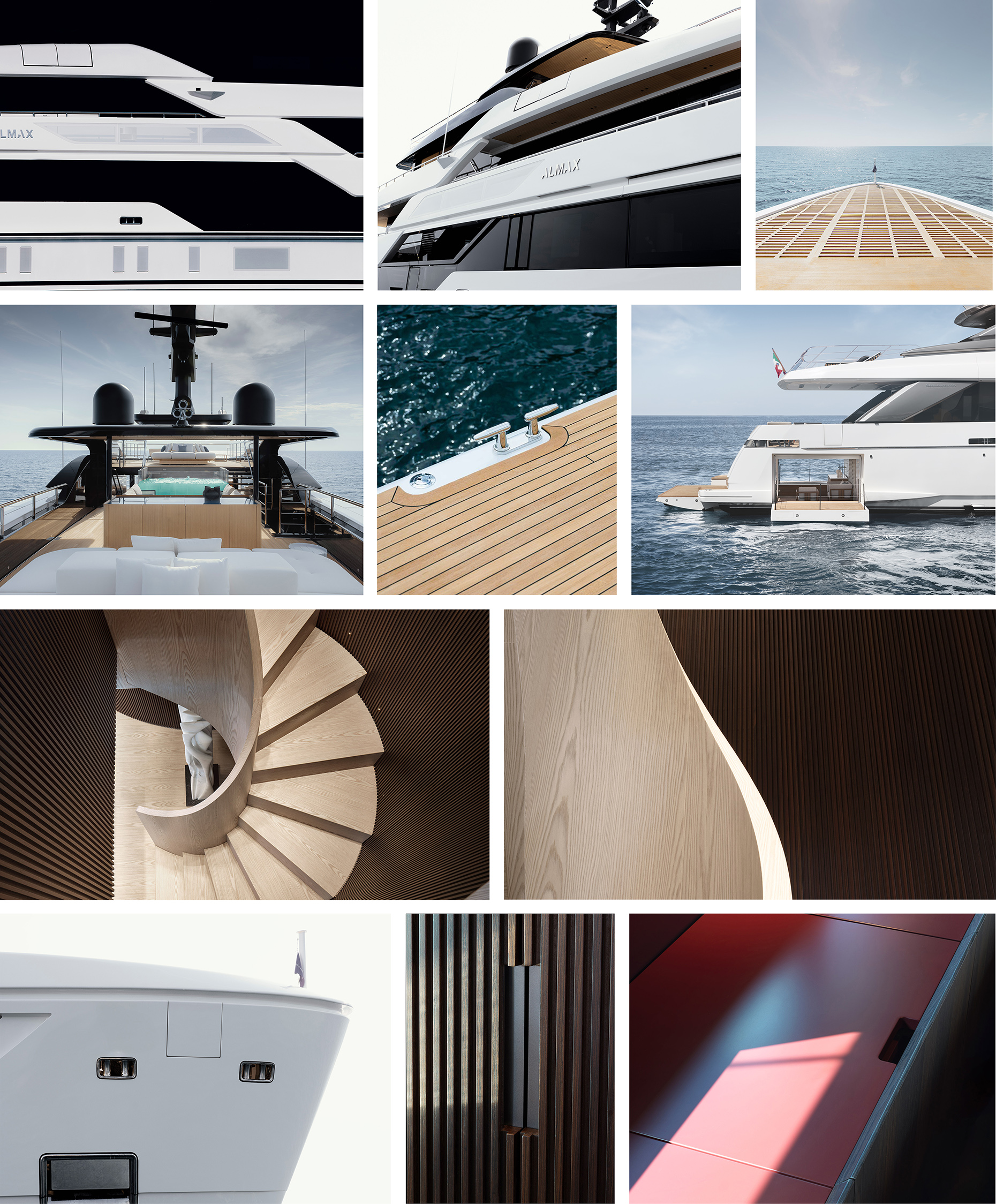
Details reveal craftsmanship, materials and design precision.
Close-up imagery should focus on textures, finishes, architectural transitions and carefully composed fragments that express quality and attention to detail. Exterior and interior details are treated with the same visual approach: restrained compositions, material richness and a refined balance between form and function.
Interior
Spaces designed to be lived, experienced and discovered.
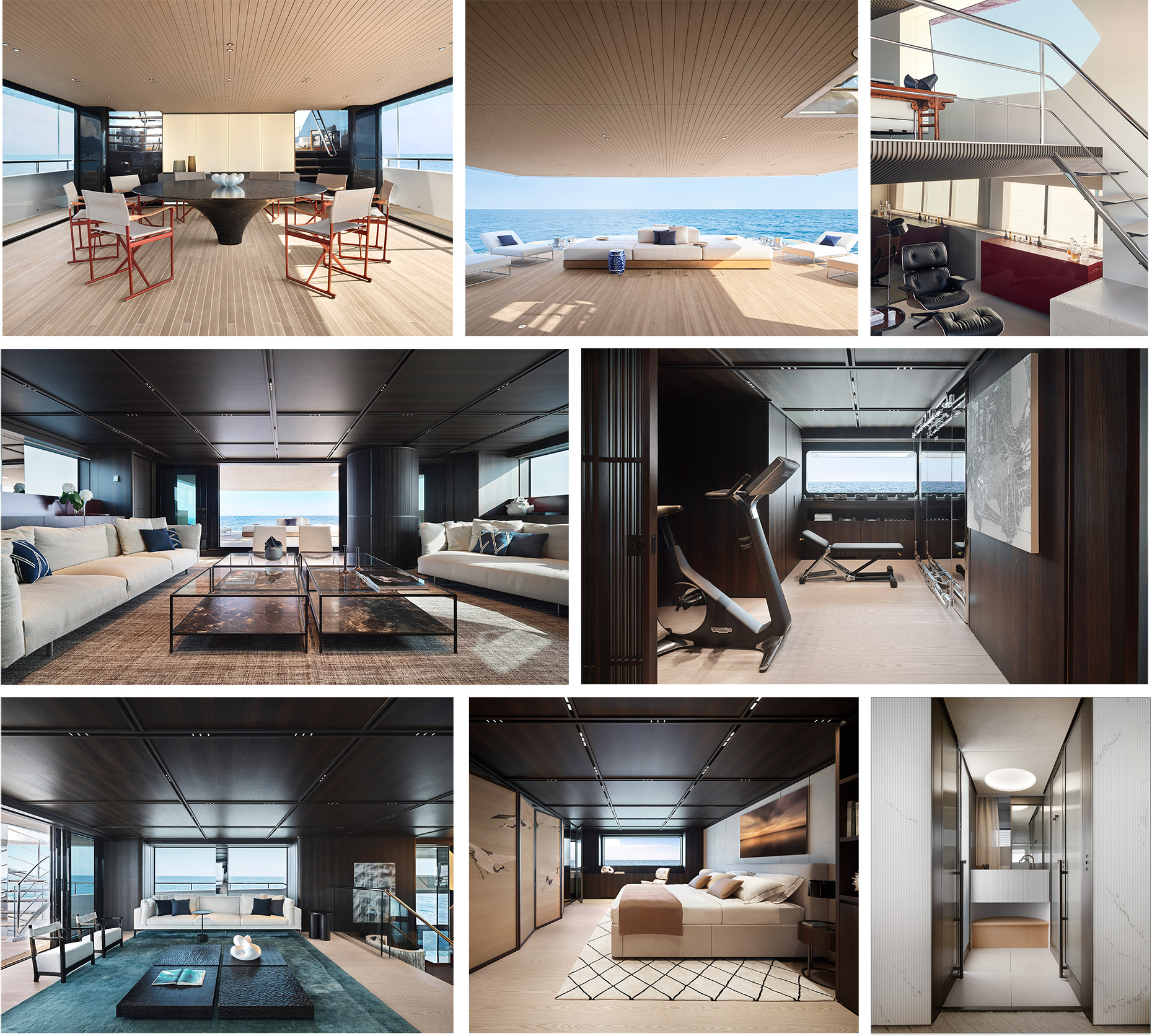
Interior imagery should communicate atmosphere before decoration. Architecture, light, materials and proportions define spaces that feel calm, contemporary and timeless. The styling remains essential and curated. Every element contributes to expressing the identity of the space without excess or visual noise.
Don'ts
Avoid visual noise. Preserve clarity and balance.
Overstyled interiors, crowded scenes and excessive decorative elements reduce readability and weaken the architectural identity of the spaces. Framing, perspective and composition should always reinforce proportion, openness and the dialogue between interior architecture and landscape.